
5 Gym Mistakes That Prevent You from Seeing Results
5 Gym Mistakes– Starting your fitness journey is a powerful first step—but staying consistent and seeing real results is where the challenge begins. Many beginners (and even intermediate gym-goers) unknowingly fall into habits that slow down progress, leading to frustration and loss of motivation.
If you’ve been working out regularly but not seeing the changes you expected, don’t worry—you’re not alone. The issue often isn’t effort, but strategy. Below are five common gym mistakes that may be holding you back, along with practical solutions to help you break through your plateau.

1. Going Too Light for Too Long
One of the biggest mistakes in the gym is staying in your comfort zone. While lifting lighter weights may feel safer, it often leads to minimal muscle stimulation and slow progress.
Your body adapts quickly. If you don’t challenge it, it won’t change.
Table of Contents
ToggleWhy This Slows Your Progress
Muscle growth relies on a principle called progressive overload—gradually increasing the demands placed on your muscles. Without it, your workouts become maintenance rather than transformation.
Signs You’re Lifting Too Light
- You never feel fatigued at the end of a set
- You can easily complete extra reps
- Your strength hasn’t improved in weeks
How to Fix It
- Apply the “2-rep rule”: If you can do 2–3 extra reps, increase the weight
- Track your workouts to ensure progression
- Focus on form first, then increase intensity
Pro Tip:
Don’t fear heavier weights. When performed with proper technique, they are essential for building lean muscle and improving overall strength.
2. Skipping Your Recovery Days
In a culture that glorifies hustle and “no days off,” rest is often misunderstood. But in fitness, recovery is just as important as training.
The Truth About Muscle Growth
When you lift weights, you create microscopic damage in your muscle fibers. Growth happens when your body repairs this damage during rest.
Skipping recovery can lead to:
- Chronic fatigue
- Decreased performance
- Higher risk of injury
- Hormonal imbalance
How to Recover Properly
Prioritize Sleep
Sleep is when your body releases growth hormones and repairs tissue. Aim for 7–9 hours per night.
Schedule Rest Days
Include at least 1–2 rest days per week depending on your training intensity.
Try Active Recovery
Instead of complete inactivity, choose light movements such as:
- Walking
- Yoga
- Stretching
- Mobility exercises
Pro Tip:
If you constantly feel sore, exhausted, or unmotivated, your body is likely asking for recovery—not more training.
3. Neglecting a Proper Warm-Up
Many people skip warm-ups to save time, but this shortcut often leads to poor performance—or worse, injury.
Why Warm-Ups Matter
A proper warm-up:
- Increases blood flow to muscles
- Improves joint mobility
- Activates the nervous system
- Enhances workout performance
What Happens If You Skip It?
- Reduced strength output
- Higher injury risk
- Poor exercise form
Effective Warm-Up Routine (5–10 Minutes)
- Light cardio (jump rope, brisk walk)
- Dynamic stretching (leg swings, arm circles)
- Movement-specific activation:
- Leg day: bodyweight squats, glute bridges
- Upper body: push-ups, resistance band pulls
Pro Tip:
Think of your warm-up as “priming your engine.” The better your preparation, the stronger your performance.
4. Measuring Progress Only by the Scale
The number on the scale can be misleading—and sometimes discouraging.
Why the Scale Isn’t Reliable
Your body weight fluctuates daily due to:
- Water retention
- Food intake
- Hormonal changes
- Muscle gain
Even more importantly, muscle is denser than fat, meaning you can lose fat and gain muscle without seeing major changes in weight.
What Is Body Recomposition?
This is when your body loses fat while building muscle at the same time. It’s common for beginners and those returning to training.
Better Ways to Track Progress
- Progress photos (weekly or bi-weekly)
- Body measurements (waist, hips, arms)
- Strength improvements
- Energy levels and endurance
- How your clothes fit
Pro Tip:
Instead of obsessing over daily weight, focus on long-term trends and overall performance improvements.
5. Training Without a Clear Plan
Walking into the gym without a plan is like trying to build a house without a blueprint. You may stay busy—but you won’t build anything meaningful.
Why Random Workouts Don’t Work
- No measurable progress
- Inconsistent training intensity
- Muscle groups may be overtrained or neglected
What a Good Training Plan Includes
- Clear weekly structure (e.g., push/pull/legs or full-body)
- Balanced muscle group targeting
- Progressive overload tracking
- Rest and recovery built in
Example Beginner Plan (3 Days/Week)
Day 1: Full Body
Day 2: Rest or Active Recovery
Day 3: Full Body
Day 4: Rest
Day 5: Full Body
Focus on compound exercises like:
- Squats
- Deadlifts
- Bench press
- Rows
- Shoulder press
Pro Tip:
Consistency beats complexity. A simple, repeatable plan will always outperform a random, complicated routine.
Bonus Tips to Accelerate Your Results
1. Don’t Ignore Nutrition
Your workouts are only half the equation. Without proper nutrition, your results will be limited.
- Eat enough protein (about 1.6–2.2g/kg body weight)
- Stay hydrated
- Maintain a balanced diet with whole foods
2. Stay Consistent
Results don’t come from one perfect workout—they come from showing up consistently over weeks and months.
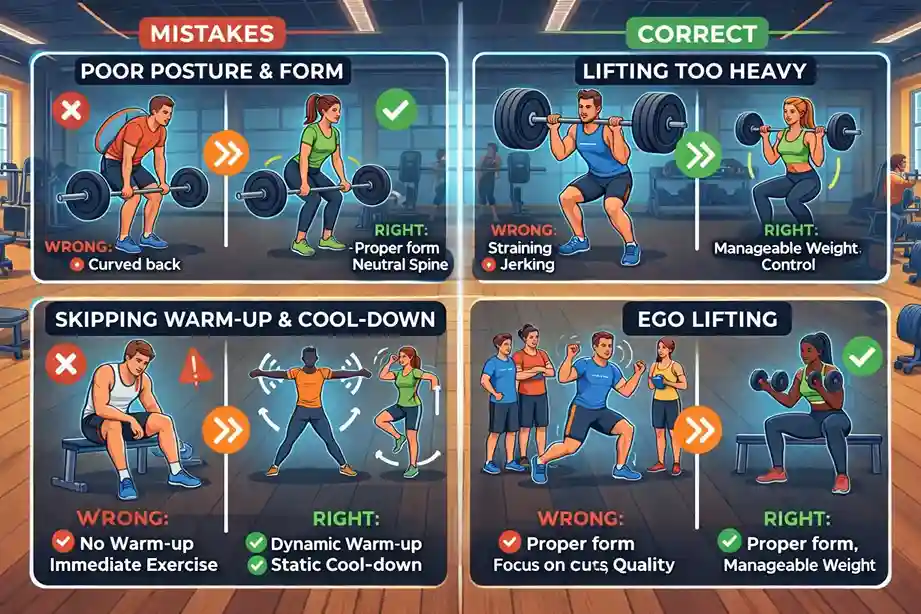
3. Focus on Form Over Ego
Lifting heavier is important, but not at the cost of proper form. Poor technique can lead to injuries and slow progress.
4. Be Patient
Fitness is a long-term journey. Sustainable results take time, discipline, and consistency.
Final Thoughts
If you’re not seeing results, it doesn’t mean you’re failing—it means something in your approach needs adjusting.
By avoiding these five common gym mistakes and applying the strategies above, you’ll unlock better performance, faster progress, and a more enjoyable fitness journey.
Remember:
Train smarter, recover better, and stay consistent. Results will follow.