
Is poverty due to circumstances or financial habits?
poverty due to circumstances or financial habits- Poverty is often framed as a result of low income, unemployment, or lack of discipline. Many assume that financial hardship stems from poor money management or bad personal choices. However, modern research suggests a far more complex reality. Poverty is not just about a lack of money—it fundamentally shapes how people think, decide, and behave.
To truly understand poverty, we must move beyond blaming individuals and instead examine the powerful interaction between circumstances and financial habits. These two forces are deeply interconnected, and neither can be fully understood in isolation.
The Role of Circumstances in Poverty
From a structural perspective, poverty is heavily influenced by external factors such as:
- Limited access to quality education and healthcare
- Unstable employment opportunities
- Complex bureaucratic systems
- Social stigma and inequality
These conditions create an environment where individuals must constantly navigate barriers just to meet basic needs. Over time, this persistent pressure shapes not only financial outcomes but also mental processes.
From a human rights standpoint, poverty is more than economic deprivation—it is a restriction of freedom, dignity, and opportunity. When people lack access to essential resources, their ability to make meaningful choices becomes severely limited.

The Scarcity Mindset: How Poverty Shapes Thinking
At the core of poverty’s psychological impact is the concept of the scarcity mindset.
Scarcity occurs when individuals have less than they need, forcing them to prioritize immediate concerns like rent, food, and medical expenses. This constant urgency narrows attention, making it difficult to focus on anything beyond short-term survival.
Rather than being a personal flaw, this is a natural cognitive response. When resources are limited, the brain adapts by concentrating on what is most urgent.
Key effects of the scarcity mindset:
- Focus on immediate problems over long-term goals
- Reduced ability to process additional information
- Limited capacity for strategic thinking
This explains why long-term financial planning often takes a back seat during periods of financial stress.
Cognitive Load and Mental Bandwidth
Another critical factor is cognitive load, often described as reduced “mental bandwidth.”
When individuals are overwhelmed by financial stress, their mental resources are consumed by urgent concerns. As a result, they may struggle with:
- Planning and organization
- Problem-solving
- Self-control and decision-making
Studies show that financial stress can temporarily reduce cognitive performance—sometimes comparable to losing several IQ points. This doesn’t reflect a lack of intelligence, but rather an overload of mental capacity.
Decision-Making Under Scarcity
Many behaviors commonly associated with poverty—such as taking high-interest loans or failing to save—are often labeled as irrational. However, when viewed through the lens of scarcity, these decisions become understandable.
Present Bias and Survival Thinking
Under financial pressure, people tend to prioritize immediate rewards over future benefits, a concept known as temporal discounting.
For example:
- Choosing quick cash over long-term investment
- Skipping preventive healthcare to save money now
- Prioritizing urgent bills over future savings
In conditions of scarcity, focusing on the present is not irresponsible—it is often necessary for survival.
The “Tunneling” Effect
Scarcity also creates a phenomenon called tunneling, where attention is narrowly focused on urgent problems while other important areas are neglected.
While this can increase short-term efficiency, it often leads to long-term consequences, such as:
- Missed opportunities
- Poor financial planning
- Cycles of recurring hardship
Self-Control Is Not Just a Personality Trait
Self-control is often misunderstood as purely a matter of discipline. In reality, it is heavily influenced by context.
Financial stress consumes the same mental resources needed for self-regulation. As those resources are depleted, it becomes harder to:
- Resist impulsive spending
- Delay gratification
- Make future-oriented decisions
This explains why individuals under financial strain may appear less disciplined—not because they lack willpower, but because their mental resources are already exhausted.
How Poverty Changes Perception and Behavior
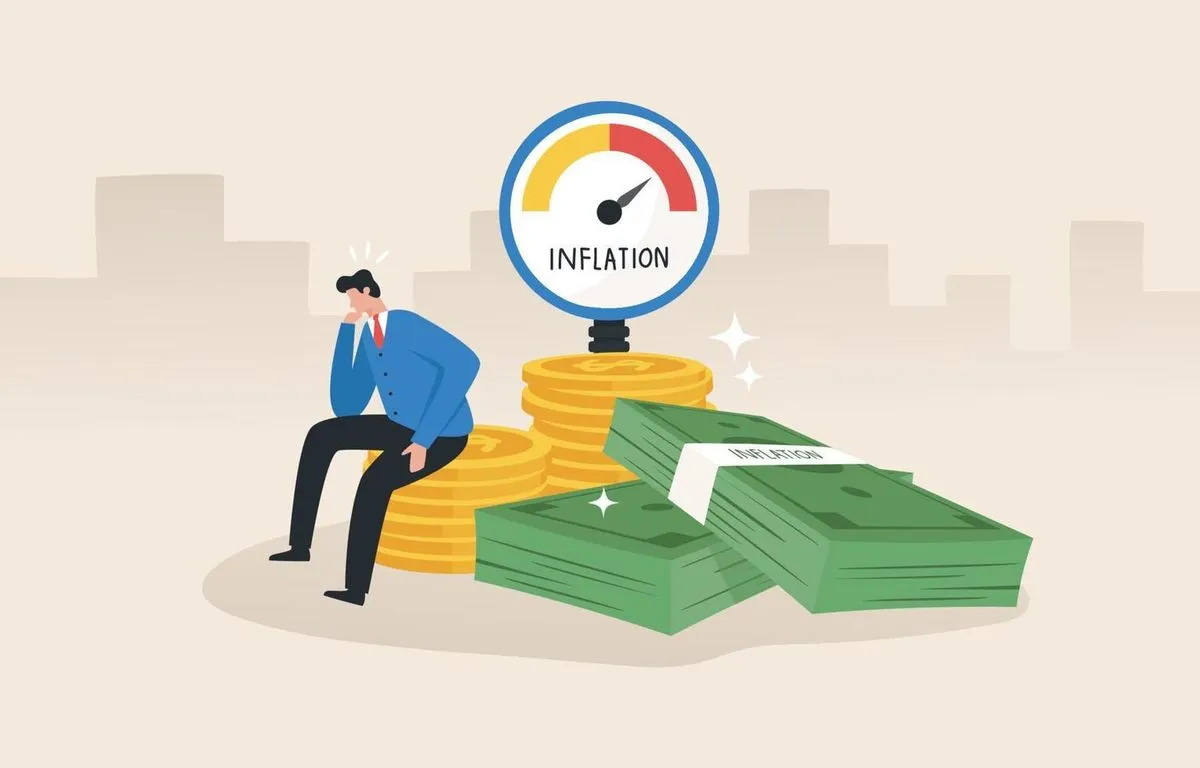
Poverty doesn’t just affect decisions—it reshapes how people perceive the world.
Under scarcity, individuals are more likely to:
- Focus on concrete, immediate details
- Struggle with abstract or long-term thinking
- Make decisions that favor short-term survival
From a neuroscience perspective, these patterns are linked to increased brain activity in areas associated with immediate rewards, and decreased activity in regions responsible for long-term planning.
This highlights an important point: poverty is not only economic—it is also cognitive and psychological.
Are Financial Habits to Blame?
While financial habits do play a role, they are often a result of circumstances rather than the root cause.
Habits such as:
- Not saving regularly
- Accumulating debt
- Making short-term financial decisions
are frequently shaped by the environment people live in. When survival is the priority, long-term wealth-building behaviors become difficult to maintain.
Blaming individuals for these habits ignores the structural and psychological pressures influencing their choices.
Toward a More Balanced Understanding
The debate between circumstances and financial habits is ultimately a false dichotomy. Poverty is best understood as the result of both external constraints and adaptive behaviors.
To address poverty effectively, solutions must go beyond financial education and include:
- Simplifying administrative systems
- Improving access to essential services
- Reducing cognitive burden (e.g., reminders, automation)
- Expanding economic opportunities
These approaches recognize that better decisions require not just knowledge, but also the mental capacity and environment to support them.
Conclusion: Rethinking Poverty in a Modern World
So, is poverty due to circumstances or financial habits?
The answer is both—but not equally. Circumstances often come first, shaping the habits that follow. Financial behaviors are frequently adaptive responses to scarcity, not evidence of irresponsibility.
Understanding this shifts the conversation from blame to empathy, and from judgment to solutions. If we want to reduce poverty, we must address not only income and opportunity, but also the cognitive and structural barriers that limit people’s ability to make better choices.
Only then can we create a society where financial success is determined not by survival constraints, but by genuine opportunity.